Lingerie fashion trends 2026 are easier to read than the runway makes them look. The direction is simple. Softer fabrics, cleaner shapes, and underwear worn as clothing instead of hidden under it. Everything else is detail. The shift is not about more skin or less. It is about comfort becoming a design decision rather than an afterthought. Buyers are tired of pieces that look good in a photograph and hurt by nine in the evening. Brands have noticed, and the collections reflect it. What follows is not a trend report written from a lookbook. It is what I see after six years of fitting rooms, wholesale meetings, and watching customers put things back on the rail. The mistakes repeat. So do the fixes.
What Lingerie Fashion Trends 2026 Actually Look Like
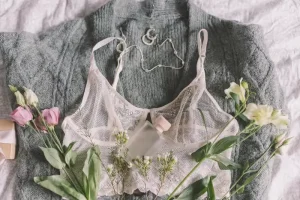
The headline for lingerie fashion trends 2026 is softness with structure. Nothing is shapeless. Nothing is rigid either. The winning pieces hold a line without gripping, and the difference lives in the fabric rather than the cut. Microfibre with a bonded edge replaces elastic trims on everyday pieces because it disappears under clothing and does not dig. Mesh has moved from decorative panel to main material, often doubled for opacity so it reads as a garment rather than a reveal. Colour has gone quiet. Warm neutrals, oxblood, sage, and a lot of soft black. Prints have almost vanished from core ranges because solid shades sell across more body types and more seasons. The commercial logic is boring and it explains most of what you see. A piece has to work for a Tuesday and a Saturday, or it does not get reordered. That single requirement killed the fussy detail and pushed attention onto proportion. Bralettes now come with real support built in, using wider underbands and moulded cups rather than wires. High waisted briefs have replaced the low rise cut almost entirely, because the high waist holds shape under clothes and sells to more ages. The same thinking runs through the more directional work. Shapewear aesthetics have crossed into mainline lingerie, so a bodysuit with firm panels looks like a bodysuit rather than a foundation garment. Visibility is deliberate now. A strap is meant to be seen and finished properly, not hidden with a plastic clip.
The Return of Real Body Fit
The most useful change in lingerie fashion trends 2026 is that fit ranges widened instead of just marketing language. Several mid size labels now grade patterns across four to six cup depths per band size rather than scaling up a single block, which is the technical difference between a garment that fits and one that merely closes. Spotting the difference is easy in a fitting room. If the centre front of a bra lifts away from the chest, the cup depth is wrong for that body and no amount of strap adjustment fixes it. If the band rides up at the back, the band is too loose and the straps are doing work they were never designed for. Fix both by sizing the band first and the cup second, which is the opposite of how most people shop. That one habit solves roughly seven out of ten fit complaints, and it explains why so many people think their body is the problem when the pattern is.
Fabric That Behaves
Fabric choice decides whether a piece gets worn twice or forty times, and this is where the gap between price points shows most honestly. Bonded edges and laser cut finishes cost more to produce and eliminate the sewn elastic that creates lines under fitted clothing. Stretch lace with a high elastane content recovers its shape after washing, while cheaper lace stretches and stays stretched. The test is simple and takes ten seconds in a shop. Hold a stretch piece at both ends, pull gently, release, and watch whether it snaps back flat. If it stays slightly wavy, it will be shapeless within a month. The fix is not to spend more money on everything. It is to spend on the pieces that sit against the skin all day and save on the ones worn for an hour.
The Silhouettes Driving Lingerie Fashion Trends 2026
Silhouette has replaced decoration as the thing that makes a piece feel current. The bralette remains the centre of the category, and it has grown up. Triangle cuts with adjustable straps are still everywhere, but the growth is in soft cup styles with a wider band that hold a fuller bust without wire. Underwire has not disappeared, it has narrowed to the pieces where support genuinely needs it, which is a healthier place for it to sit. Bodysuits are the second big story in lingerie fashion trends 2026, and they are being bought as tops rather than as underwear. A high leg bodysuit in a matte microfibre works under a blazer, and the same piece in stretch lace works with wide leg trousers. Slips have returned in a shorter, straighter cut that reads as a dress rather than nightwear. The common thread across all three is that they are complete garments. They do not need a second layer to make sense, which is exactly why they sell. Coordinated sets still matter commercially, and the smartest ranges now build a set around one hero piece with three or four compatible bottoms rather than a single rigid pairing.
Outerwear Styling With Intimates
Wearing a bodysuit or a slip as outerwear stopped being a styling trick and became ordinary, and the rules that make it work are practical rather than aesthetic. The first is opacity. Anything worn as a top needs to pass a phone flash test before it leaves the house, because stretch fabric that looks solid in a mirror can go transparent in daylight. The second is structure. A sheer piece over nothing reads as undressed, while the same piece over a seamless base layer reads as intentional. The third is proportion. A fitted bodysuit balances a wide leg trouser, and a loose slip needs a structured shoe or a tailored jacket to stop the whole outfit looking like sleepwear. Layering is where most outfits succeed or fail. A slip dress under a knit vest works. The same slip under an oversized shirt looks like a mistake, because both pieces are soft and neither creates a line. In lingerie fashion trends 2026 the styling advice is not about matching. It is about contrast, one soft piece against one structured piece, every time.
Dressing It Up Without Looking Dressed Up
The most common question in fittings is how to wear a lace piece outside without it looking like a costume. The answer is almost always to reduce everything else. Lace with denim, a plain knit, and flat shoes reads as styling. Lace with satin, heels, and jewellery reads as fancy dress. Tone is set by the surrounding pieces rather than by the lingerie itself, which is why the same bodysuit can look like evening wear or a Tuesday top depending on what sits over it. Visible straps and visible edges are part of the look now, and they work when they look deliberate. A wide strap in a matching tone looks chosen. A narrow strap slipping off a shoulder looks like a wardrobe failure. Check strap width and placement before buying anything meant to be seen, and check that the adjusters sit flat rather than digging into the shoulder blade.
Layering for Real Temperatures
Layering sounds simple until you try it in a cold room with a heated office. The practical answer is a seamless base layer in a tone close to your skin, a lingerie piece on top of it, and a structured outer layer that can come off without exposing anything unintended. That three layer formula handles most situations. It also solves the transparency problem, because the base layer does the covering and the lingerie piece does the styling. The mistake is treating the base layer as invisible. It is visible, so it needs to be clean, smooth, and free of visible seams under whatever sits on top.
The Mistakes That Undo an Outfit, and How to Fix Them
The first mistake is buying for the size you want rather than the size you are, and it shows up immediately in the band riding up or the cup gaping. Fix it by measuring once at home with a soft tape, snug under the bust and level across the back, and treating that number as the starting point rather than a verdict. The second mistake is ignoring the wash label, which destroys more good pieces than any fit issue. Stretch lace and microfibre lose shape in a hot machine and a tumble dryer, and the damage is permanent rather than gradual. Fix it by washing cold, using a mesh bag, and drying flat, which costs nothing and roughly doubles the life of the garment. The third mistake is over-layering. People add a slip, a robe, and jewellery to make a piece feel finished, and the result looks heavy. Fix it by removing one element before leaving the house, every time. The fourth mistake is buying a set when only one half fits well. Fix it by buying the halves separately, which most ranges now allow and which is the single most useful change in how lingerie fashion trends 2026 is merchandised. The fifth mistake is comfort traded for appearance at the fitting stage, usually a band that feels fine standing and unbearable sitting. Fix it by sitting down in the fitting room for two full minutes before deciding, because a band that digs when seated will dig every day.
Conclusion
Lingerie fashion trends 2026 reward the buyer who checks fabric behaviour, band fit, and opacity before anything else. Softness with structure is the direction. Bodysuits, slips, and grown up bralettes are the pieces carrying it, and contrast is the styling rule that makes them work outside the bedroom.
Start with the band size and work outward. Pull test the stretch, sit down in the fitting room, and wash cold from the first wear. Buy the halves of a set separately when only one fits properly. None of that is glamorous advice, and all of it is what separates a piece worn forty times from one worn twice. The trends will move on. A garment that fits and survives a wash cycle will still be in the drawer when they do.
FAQs
1. What are the biggest lingerie fashion trends for 2026?
Soft structure is the headline, meaning pieces that hold a line without wires or tight elastic. Bodysuits worn as tops, short straight slips, grown up soft cup bralettes, high waisted briefs, and a quiet neutral colour palette dominate core ranges across most price points.
2. How do I wear lingerie as outerwear without it looking inappropriate?
Use contrast and opacity. Pair one soft piece with one structured piece, such as a lace bodysuit with tailored trousers. Test the fabric under a phone flash before leaving, and add a seamless base layer underneath anything sheer so the covering is deliberate.
3. Why does my bra band ride up at the back?
The band is too loose, which means the straps are carrying weight they were never designed to hold. Size the band first by measuring snug under the bust and level across the back, then choose the cup depth. Most fit complaints disappear once the band is correct.
4. How should I wash lace and microfibre lingerie?
Cold water, a mesh laundry bag, and flat drying. Hot machine cycles and tumble dryers break down elastane and distort bonded edges permanently. Avoid fabric softener because it coats the fibres and reduces stretch recovery. Hand washing extends life further but cold machine washing is usually enough.
5. Is it better to buy a matching lingerie set or separate pieces?
Buy separates when only one half fits well, which is common because tops and bottoms rarely scale together. Many ranges now sell halves individually. A well fitting bra with a mismatched brief worn regularly beats a coordinated set that stays in the drawer because one piece is uncomfortable.