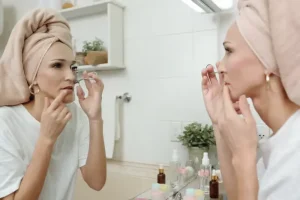
Most makeup problems are not makeup problems. They are prep problems wearing makeup. Foundation that separates by lunchtime, patches of dryness showing through a base, concealer creasing under the eye. Nearly all of it traces back to what happened in the ten minutes before anything was applied.
I spent five years behind a beauty counter and another three doing bridal work, which means I have seen the same four failures several thousand times. The fix was rarely a new product. It was the order of steps, the amount of product, and how long someone waited between layers.
This piece is about that. What beauty tips skincare prep actually means in practice, how to build a routine that suits the skin you have rather than the skin in an advert, the application techniques that change a finish, and the glow tricks that look like skin instead of highlighter.
Why Skincare Prep Decides How Makeup Performs
Makeup sits on the surface of the skin. If that surface is uneven, flaky, or overloaded with product, the makeup will show every bit of it within two hours.
Think of it as a surface problem rather than a beauty problem. Paint over a wall with loose dust and the finish fails regardless of the paint quality. Skin works the same way. A smooth, lightly hydrated surface holds a base. A dry or over-slicked surface repels it.
Good beauty tips skincare prep is not about using more products. It is about getting the surface into a state where the next layer can grip.
The Three Minute Rule
Ten minutes of prep changes a face less than three minutes done in the right order.
Most people rush prep or skip it entirely and then spend twenty minutes fixing the consequence. Three minutes is enough for a cleanse, a hydrating layer, and a sunscreen, provided you are not fighting five other products for space on the skin.
The rule I give clients is simple. Prep ends when the skin feels like skin again, not when it feels like a product.
What Prep Actually Does
Prep does three jobs and you should be able to name which one you are doing at each step.
It cleans the surface so product can adhere. It adds water to the skin so the base has something to sit on rather than sitting in dry patches. And it creates a barrier so the base does not slide into pores or collect in fine lines.
Anything that does none of those three jobs is optional. Most routines contain at least two products that fall into that category.
Building a Prep Routine That Suits Your Skin
The right routine is decided by your skin on the day, not by your skin type on a form. Skin changes with weather, sleep, hormonal cycles, and travel.
That is why a fixed routine often stops working. The routine did not fail. The skin underneath it moved.
Cleansing Without Stripping
The most common prep error I see is over cleansing. Someone with oily skin washes twice, uses a foaming cleanser, and then wonders why their base cracks by noon.
Skin that has been stripped produces more oil to compensate, and that oil breaks down makeup faster than dry skin ever would. The cleanser should leave the face comfortable rather than tight.
For most people a gentle gel or cream cleanser in the morning is enough, with a slightly more thorough cleanse at night. If your skin feels squeaky, the cleanser is too strong.
Hydration Layers and Wait Time
Hydration is where prep earns its money, and it is where wait time matters.
A hydrating serum or essence goes on first, pressed rather than rubbed. Then a light moisturiser, then a minute of waiting. That minute is not decorative. It lets water bind to the skin so the next layer sits on top rather than mixing in.
If you apply sunscreen and foundation over a wet face, everything dilutes. That is how a base ends up patchy and how people conclude a product is bad when the application was the problem.
Sunscreen as the Final Prep Step
Sunscreen closes the routine. It is the last thing on the skin before makeup, and it is doing real work in the base.
Modern formulas sit well under makeup, but they need time. Two minutes minimum, five is better. Applying foundation onto sunscreen that has not set is the single most reliable way to get pilling, and pilling gets blamed on the foundation every time.
Use two fingers worth of product for the face and neck. Most people use a third of that, which means the protection is a fraction of what the label claims.
Application Techniques That Change the Finish
Application decides more of the finish than formula does. The same foundation can look like skin or like a mask depending on how it goes on.
Tools, Fingers, and Pressure
Fingers give the most skin-like finish because warmth helps the product melt in. A damp sponge gives the most diffused finish and sheers out coverage. A brush gives the most coverage and shows texture fastest.
The pressure question matters more than the tool. Pressing product into the skin builds a thin layer that lasts. Swiping across it lifts the prep underneath and creates streaks.
If a base looks heavy, the cause is usually three thin layers applied with pressure rather than one thick layer spread out.
Order Matters More Than Product
The sequence is fixed and worth repeating. Skincare, then primer if you use one, then base, then concealer, then powder only where needed.
Two habits break this sequence and both are common. Concealer applied before foundation, which means the base wipes half of it away. Powder applied all over, which flattens the glow that beauty tips skincare prep spent three minutes creating.
Powder belongs on the places that move, meaning the sides of the nose, the chin, and the under eye. Leave the cheekbones and the centre of the forehead alone if you want light to sit there.
Glow Enhancers That Look Like Skin
Glow is about placement and restraint. Most glow failures come from using a good product in the wrong place.
Where to Place Light
Light lands on high points. The tops of the cheekbones, the bridge of the nose, the centre of the forehead, and a small amount above the cupid’s bow.
Anywhere else and the product reads as a stripe rather than a reflection. The most common mistake is applying highlighter along the whole cheek, which makes the face look wider and the texture more visible.
Liquid or cream formulas go under powder, pressed powders go over it. Mixing the order produces patchy light, which looks like a mistake rather than a technique.
The Over-Highlight Mistake
More highlighter does not mean more glow. It means more visible texture.
Shimmer particles catch light on the surface of the skin, and they catch on dry patches and pores with the same enthusiasm. A small amount in one place looks like a lit face. Four layers in four places looks like a filter.
The test is a phone photo in daylight. If the highlighter reads as a bright stripe, remove half of it.
Common Mistakes and How to Spot Them
I keep a short list of failures because they repeat so reliably, and each one has a specific tell.
Pilling, which looks like small rolls of product on the skin, means a water based product went onto a silicone based one or the wait time was skipped. Fix it by giving each layer a minute and matching formulations.
Separation, where the base slides into patches by midday, usually means too much hydration underneath rather than too little. Skin that is genuinely dry looks flaky rather than patchy, and the two get confused constantly.
Creasing under the eye comes from too much concealer and too little setting. Thin the product, set only the inner corner, and leave the outer area free so it can move.
And the fourth is prep that triggers breakouts. Usually a heavy occlusive layer left on all day, which traps oil and bacteria. If breakouts appear along the jaw and forehead after a routine change, the richest product is the first suspect.
Prep That Triggers Breakouts
Oily skin frequently gets the harshest prep, which is exactly backwards. Aggressive cleansing and alcohol based toners strip the surface barrier, and the skin responds by producing more oil within hours.
The better approach is gentle cleansing, light hydration, and a primer only where pores are visible rather than across the whole face. Congestion usually improves within two weeks of reducing the routine rather than adding to it.
Adapting Prep Through the Year
Skin behaves differently in February and July, and the routine should follow.
Cold weather reduces oil production and increases water loss, so hydration layers matter more and powder matters less. Warm weather increases oil and sweat, so lighter layers and more targeted powder work better.
The mid season weeks catch people out because the routine that handled winter suddenly feels heavy. When a base starts to slide in spring, the fix is usually to remove a product rather than add one.
Two Situations Worth Learning From
A bride I worked with had tried four foundations in the month before her wedding, convinced each one was wrong. Her prep was a foaming cleanser, an exfoliating toner, and a rich night cream left on under makeup. Three minutes of adjustment changed everything. We swapped to a cream cleanser, dropped the toner, and used a light hydrating layer with a two minute wait. The fourth foundation, which she had already written off, sat perfectly for eleven hours.
The second case was a client who could not understand why highlighter made her skin look textured. Her prep was fine. The placement was the problem. She was applying along the full cheek rather than the top of the cheekbone, which put shimmer directly onto the area with the most visible pores. Moving it up by three centimetres solved a problem she had been treating as a skin issue for two years.
Both stories point at the same thing. Beauty tips skincare prep and application are systems rather than product lists, and systems can be fixed without spending anything.
What to Skip
Not everything labelled as prep belongs in a routine.
Exfoliating every day thins the surface and makes makeup sit worse, not better. Twice a week is plenty for most people, and once a week is fine for sensitive skin.
Primer is optional when the prep is good. A well hydrated, settled surface holds a base without it, and primer added on top of too much skincare is a common cause of pilling.
Face mists applied over makeup mostly move product around. They feel refreshing and they do little for longevity.
And a ten step routine is rarely better than a four step one. Each additional layer adds a wait time and a chance for two products to disagree with each other.
Conclusion
Beauty tips skincare prep come down to three minutes, four steps, and one habit of waiting. Cleanse gently, hydrate, wait a minute, then sunscreen and wait again. Press product into the skin rather than swiping across it, and powder only where the face moves.
Glow lives in placement, not quantity. One small area on the top of the cheekbone does more than four layers along the whole cheek.
Most makeup problems people bring to a counter are prep problems, and most prep problems are solved by removing a step rather than buying one. Start by fixing the wait time and the cleansing. That alone changes how a base performs more than any new purchase will.
FAQs
1. What is the correct order for skincare prep before makeup?
Cleanse, hydrate with a serum or essence, apply a light moisturiser, wait one minute, then sunscreen and wait two more. Primer is optional after that. The waits matter because a base applied onto unset product will pill or dilute rather than grip the skin properly.
2. Why does my foundation pill or roll off my face?
Almost always a timing or formulation clash. Water based products applied over silicone based ones, or foundation applied before sunscreen has set, cause small rolls of product on the skin. Give each layer a full minute and keep water and silicone formulas separate in the routine.
3. How do I stop concealer creasing under my eyes?
Use far less than you think and set only the inner corner. Most creasing comes from too much product collecting in fine lines that move all day. A thin layer pressed in, with powder on the inner third only, lets the outer area stay flexible instead of cracking.
4. Does skincare prep matter more than the makeup I buy?
For finish and longevity, yes. A well prepped face holds a mid range foundation better than a poorly prepped face holds an expensive one. Surface condition decides adhesion, and no formula can compensate for dry patches, excess oil, or product that has not had time to set.
5. How long should I wait between skincare and makeup?
Give moisturiser about a minute and sunscreen two to five minutes. That is enough for each layer to bind and set without the skin feeling tight. Applying immediately after sunscreen is the most common cause of patchy bases and pilling, and it is the easiest fix available.